I remember waking up one morning after a long week at my desk, feeling that familiar stiffness in my neck and shoulders. It was like my body was protesting the hours hunched over emails. That day, I tried a few gentle neck rolls mid-morning, and the ease that followed made folding laundry or reaching for a high shelf feel smoother. Flexibility plays a key role in daily life, supporting better posture, reducing everyday tension, and helping with fluid movement as we age.
These 8 light activities come from my routine and draw on evidence-informed practices like dynamic stretching and mobility work. They focus on gentle muscle lengthening and joint mobility, which can help maintain range of motion without strain. Many people notice less tightness after consistent practice, often tied to improved blood flow and stress response calming. Try one today—perhaps the neck rolls—and note how your body feels afterward.
Building flexibility isn't about extreme bends; it's about small, repeatable moves that fit into your day. In my case, adding shoulder circles during coffee breaks shifted how I carried tension from work. Track simple signals like energy levels or ease of movement to see what works for you.
Why Gentle Flexibility Work Eases Everyday Tension
Gentle flexibility activities tend to stimulate blood flow to muscles and tissues, which supports better nutrient delivery and waste removal. This process can help calm the body's stress response, as light movement activates the parasympathetic nervous system for relaxation. Over time, it may improve joint lubrication through increased synovial fluid circulation.
Practices like these align well with circadian rhythms, making morning sessions particularly helpful for setting a mobile tone to the day. Evidence from mobility studies and yoga research shows modest gains in range of motion with regular, low-intensity work—often noticeable in weeks rather than days. Fascia, the connective tissue around muscles, also responds to gentle stretching, potentially reducing that "stuck" feeling from prolonged sitting.
In my routine, pairing these with deep breaths enhances the effect, much like when considering how to practice simple mindful breathing for relaxation. It creates a calm loop of movement and awareness without overwhelming the body.
Key Safety Notes Before You Start Stretching
Listen to your body first—stop any activity if you feel sharp pain, and distinguish it from mild stretching sensations. A short walk or marching in place can serve as a gentle warm-up to prepare muscles and joints. These activities suit most healthy adults, but if you have recent injuries, arthritis, or balance issues, start extra slow.
Consult a doctor before beginning if you have chronic conditions or haven't moved much lately. Breathe steadily through each move, and aim for comfort over depth. This approach keeps things safe and sustainable.
Upper Body Releases: Neck, Shoulders, and Wrists
Upper body tension often builds from screens and carrying bags, so these three activities target common tight spots. They promote local circulation and ease held stress. Here's how to do them, with tips from my daily practice.
- Gentle Neck Rolls: Sit or stand tall, drop your chin to chest, then slowly roll your head to the right, back, left, and forward—complete 5 circles each direction. Pause at each comfortable point for a breath. This eases neck and upper trapezius tension from desk work; in my routine, I do it during calls, feeling immediate relief in head turns.
- Shoulder Circles and Shrugs: Lift shoulders toward ears on an inhale, squeeze for a count of 3, then roll them back and down on exhale—10 reps forward, 10 backward. Add shrugs by holding the top briefly. It mobilizes shoulder joints and reduces hunching; I weave this into waiting for the kettle, noticing better posture by lunch.
- Wrist Flexions and Circles: Extend one arm, use the other hand to gently pull fingers back for 20 seconds, then point fingers down—switch sides, follow with 10 circles each direction per wrist. This counters typing strain and supports grip ease; mornings after journaling, it prevents that achy feeling.
Core and Spine Savers for Better Posture
Moving to the core and spine helps counteract slouching from daily habits. These two flows encourage spinal mobility and gentle strengthening. They fit seamlessly after upper body work.
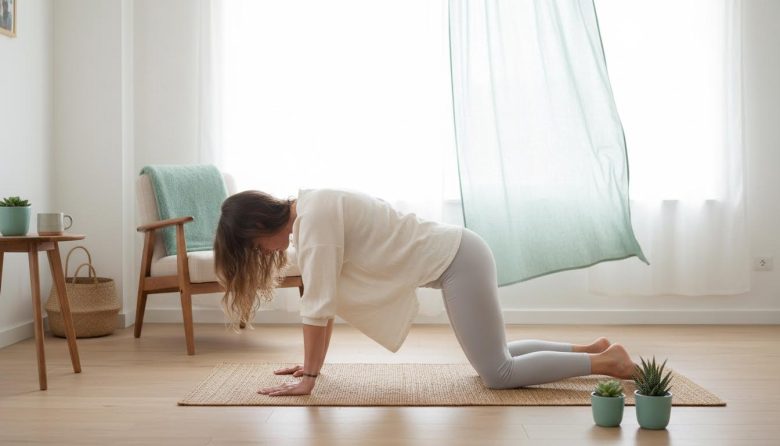
- Cat-Cow Flow: On all fours, inhale to arch your back (cow: belly drops, gaze up), exhale to round (cat: tuck chin, pull navel in)—flow 8-10 breaths. This lubricates the spine and eases mid-back tightness; I use it post-breakfast, feeling taller through the day.
- Seated Spinal Twist: Sit with legs crossed or extended, place right hand on left knee, twist gently right while looking over shoulder—hold 20-30 seconds per side, breathing deeply. It releases rotational tension in the torso; evenings unwind my desk twist, improving sleep posture.
Lower Body Lifters: Hips, Legs, and Ankles
Lower body activities address sitting's toll on hips and legs, promoting balance and stride. These three are stable and quick, building on prior sections for full-body flow. Try them standing or seated as needed.
- Seated Forward Fold: Sit with legs extended, hinge at hips to reach toward feet (or shins)—hold 30 seconds, breathing into the hamstrings, repeat 3 times. This lengthens the back body and calms hips; my mid-afternoon version pairs with a hydration break, easing leg fatigue.
- Standing Leg Swings: Hold a wall, swing one leg forward and back gently 10 times, then side to side 10 times—switch legs. It opens hips dynamically; before walks, it preps my gait without strain.
- Ankle Circles: Lift one foot, rotate ankle 10 times each direction—switch, add pointed/flexed foot variations. This boosts ankle mobility for stability; mornings prevent stubbed toes from stiff nights.
| Activity | Target Areas | Duration & Reps | Why It May Help | Quick Tip |
|---|---|---|---|---|
| Gentle Neck Rolls | Neck & upper traps | 1-2 min, 5 each direction | Eases screen-induced tension | Breathe at each pause |
| Shoulder Circles/Shrugs | Shoulders & upper back | 1 min, 10 each way | Improves posture alignment | Sync with inhales/exhales |
| Wrist Flexions/Circles | Wrists & forearms | 1 min per side | Counters repetitive strain | Gentle pull, no bounce |
| Cat-Cow Flow | Spine & core | 1 min, 8-10 breaths | Enhances spinal fluidity | Move with breath rhythm |
| Seated Spinal Twist | Torso & mid-back | 30 sec per side | Releases rotational hold | Twist from abdomen |
| Seated Forward Fold | Hamstrings & hips | 30 sec x 3 | Lengthens posterior chain | Hinge from hips |
| Standing Leg Swings | Hips & legs | 1 min per leg | Boosts dynamic hip mobility | Hold stable support |
| Ankle Circles | Ankles & feet | 30 sec per ankle | Supports balance foundation | Full range, no forcing |
This table offers a quick scan to pick based on time or tight spots—use it as your daily selector.
What to Try Next: Simple Ways to Add Flexibility Daily
Integrating these builds habits without pressure; here's what works in my routine. Experiment and track mood or energy shifts.
- Morning 5-minute circuit: Pick three from the table, like neck rolls, cat-cow, and ankle circles—do before coffee for circadian alignment.
- Desk break pairing: Every hour, shoulder shrugs plus wrist circles; ties into a simple 7-day plan to boost natural daily energy by countering slump.
- Evening wind-down: Spinal twist and forward fold while watching TV—note sleep quality next day.
- Walk enhancer: Leg swings pre-stroll, ankle circles post; enhances stride ease.
- Breath-movement combo: Add rolls with mindful inhales, similar to beginner's guide to balanced everyday meals for nourishing flow—track weekly comfort.
- Weekly check-in: Sunday, full 10-minute table scan; adjust based on week's tight spots.
Start with one idea this week—my stiff mornings improved steadily with consistency. Small tracking keeps it relatable.
FAQ
How often should I practice these light activities?
Three to five days a week often builds habits without overload, allowing recovery. Adjust based on your body's signals like energy or soreness. Consistency over intensity tends to yield steady ease.
Are these suitable for complete beginners?
Yes, they start gentle and scalable—begin with fewer reps and seated options. Note comfort levels daily to progress naturally. Most find them accessible right away.
What if I feel discomfort during an activity?
Distinguish mild stretch ache from sharp pain; scale back depth or reps if needed, and breathe steadily. Mild sensations often fade with practice. Rest and retry later if persistent.
How long until I notice flexibility improvements?
It varies by person and starting point; many report easier movement in 2-4 weeks with regular sessions. Track simple range like forward reach weekly. Patience supports sustainable gains.
Can I combine these with strength training or cardio?
They often complement well—try post-workout when muscles are warm for optimal flow. Space apart if new to layering. Listen for fatigue cues to balance.