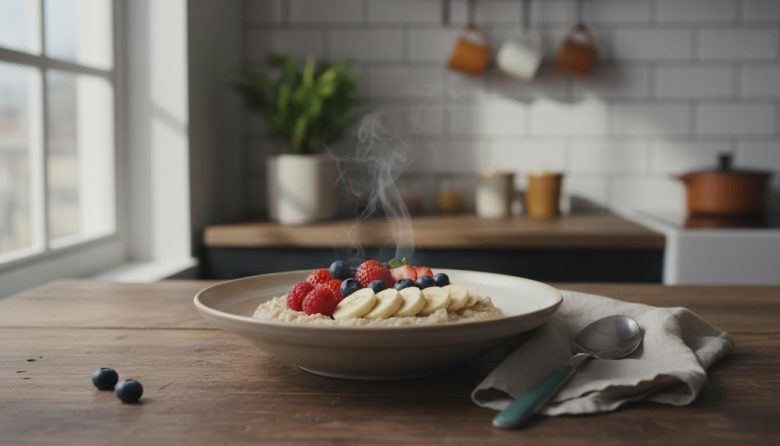
Picture this: You’re powering through your morning, but by mid-afternoon, that familiar slump hits. Your focus fades, and reaching for another coffee feels like a band-aid. Everyday foods can offer a gentler lift, supporting steady energy through nutrients like complex carbs, B vitamins, and healthy fats.
These choices help stabilize blood sugar levels, which often prevents the crashes from refined sugars. They nourish mitochondria—the cell powerhouses—for more reliable daily vitality. Science shows balanced nutrients tend to enhance alertness without jitters, aligning with your natural circadian rhythm.
Today, we’ll explore five simple foods: oatmeal, almonds, bananas, eggs, and spinach. Each brings unique perks, like fiber for sustained release or minerals for muscle support. You’ll get easy, visual prep ideas to build confidence in your kitchen routine.
Start small—swap one item into your day and notice how your energy flows. Track simple signals like mood lifts or fewer yawns. This mindful experimentation can turn slumps into smooth sailing, one bite at a time.
Oatmeal’s Gentle Morning Lift
Why it helps
Oatmeal shines with beta-glucan fiber, which slows digestion for steady blood sugar. This often sidesteps the spikes and dips tied to refined carbs or pastries. It supports your stress response too, keeping energy even during busy starts.
Whole oats fuel mitochondria efficiently, promoting lasting fullness. Many feel more focused hours later, without the post-meal fog.
What to try
- Whip up overnight oats: Layer ½ cup rolled oats in a jar with almond milk, chia seeds, and a sprinkle of nuts. By morning, it’s creamy and grab-ready—picture a soft, pudding-like texture.
- Go savory: Stir cooked oats with a soft-boiled egg, wilted spinach, and a dash of soy sauce for a warm, hearty bowl that looks restaurant-fresh.
- Bake mini oatmeal bites: Mix oats, mashed banana, and cinnamon; portion into muffin tins. Bake at 350°F for 20 minutes—perfect portable pops.
- Microwave quickie: Combine oats and water in a mug, zap for 2 minutes, top with berries. Stir for a fluffy, no-fuss lift.
Safety / when to be cautious Choose gluten-free oats if sensitive. Stick to ½ cup dry to ease digestion and skip bloating.
Almonds’ Sustained Nutty Power
Why it helps
Almonds pack healthy fats, protein, and magnesium, key for cellular energy production. Magnesium often aids focus and calms the nervous system, dodging caffeine jitters. This combo tends to sustain you through meetings or errands.
Unlike sugary snacks, almonds release energy gradually, matching your body’s rhythm for all-day poise.
What to try
- Grab a handful (about 1 oz): Crunch them plain for a satisfying snap, feeling the subtle sweetness emerge.
- Spread almond butter on apple slices: The crisp fruit pairs with creamy nuttiness—like a natural PB&J upgrade.
- Mix trail mix: Toss almonds with pumpkin seeds and dried cherries for a colorful, chewy handful.
- Chop into yogurt: Swirl atop Greek yogurt with honey for layered crunch and creaminess.
- Roast lightly: Spread on a sheet, bake at 300°F for 10 minutes—enhances flavor without oil.
Safety / when to be cautious Cap at 1 oz if watching calories. Chew thoroughly to support digestion.
Pairing almonds with 6 breathwork techniques for quick calm moments can amplify that steady focus beautifully.
Bananas’ Quick Potassium Recharge
Why it helps
Bananas deliver potassium, natural sugars, and fiber for muscle function and electrolyte balance. This mix often bolsters energy on active days, countering fatigue from dehydration or workouts. Fiber tempers sugar release for a smooth ride.
They’re portable power, aligning with hydration needs for optimal oxygen flow.
What to try
- Blend frozen banana smoothies: Toss chunks with yogurt and spinach—watch it whirl into velvety coolness.
- Stuff with nut butter: Slice lengthwise, smear inside, and sprinkle cinnamon for a stuffed treat.
- Bake into chips: Thin-slice, bake at 200°F for 1-2 hours until crisp—guilt-free crunch.
- Mash on toast: Spread ripe banana with a pinch of sea salt for creamy, open-faced bliss.
Eggs’ Protein-Packed Steady Burn
Why it helps
Eggs offer high-quality protein and B vitamins, aiding slow energy release from fats and proteins. This often stabilizes mood and alertness, fueling brain and body evenly. B vitamins support metabolism, tending to lift afternoon drags.
Versatile and quick, they fit any rhythm without weighing you down.
What to try
- Boil a batch: Simmer 10 minutes, peel, and store—easy fridge snacks with a firm bite.
- Scramble with veggies: Whisk eggs, fold in diced peppers and onions, cook soft for fluffy color pops.
- Bake egg muffins: Grease tins, crack eggs over ham and cheese, bake 15 minutes at 375°F.
- Poach on toast: Simmer in swirling water 3 minutes, nestle atop whole-grain for elegant simplicity.
- Fry sunny-side up: Low heat for runny yolks that mingle perfectly with greens.
Safety / when to be cautious Cook fully to minimize salmonella risk. Limit if monitoring cholesterol.
Spinach’s Hidden Iron Surge
Why it helps
Spinach provides iron and folate, crucial for oxygen transport in blood. This tends to ease fatigue linked to low iron, boosting overall vitality. Paired with vitamin C, absorption improves for better daily flow.
Leafy greens like spinach hydrate and alkalize gently, supporting sustained pep.
What to try
- Boost smoothies: Stuff a handful into your blender base—disappears into green goodness.
- Sauté as a side: Wilt in olive oil with garlic for glossy, aromatic bites.
- Toss salad with citrus: Dress baby spinach with lemon juice to brighten iron uptake.
- Bake chips: Tear leaves, mist with oil, crisp at 350°F for 10 minutes—shatteringly light.
- Stir into oats: Add fresh handful at end for tender, nutrient-packed flecks.
For more ideas, explore how to add more leafy greens to your meals easily and watch energy rise.
Energy-Boosting Food Swaps
Swapping low-energy defaults for these foods simplifies your routine. This table highlights quick changes with clear benefits. Visualize your plate transforming for smoother days.
| Low-Energy Default | Boosting Swap | Key Benefit | Easy Prep |
|---|---|---|---|
| Sugary cereal | Oatmeal | Steady blood sugar via fiber | Overnight jar or microwave |
| Potato chips | Almonds | Magnesium for cell energy | Handful, roasted optional |
| Candy bar | Banana | Potassium-electrolyte recharge | Peel and eat, or blend frozen |
| Processed snack bar | Eggs | Protein for sustained burn | Boil batch or scramble quick |
| White bread toast | Spinach salad/smoothie | Iron for oxygen transport | Sauté, blend, or raw toss |
Try one swap daily and track your energy for a week. Jot notes on mood, focus, and sleep quality. Small shifts often reveal big wins—your body will thank you with vibrant flow.
Combining these with how to incorporate gentle stretches into your busy day enhances the feel-good momentum.
Frequently Asked Questions
Can these foods replace my coffee habit?
These foods may complement caffeine by offering steadier baselines through nutrients like magnesium and fiber. Coffee provides a quick spike, but pairing it with almonds or oats often smooths the ride. Experiment with timing—sip mid-morning after oatmeal—and track your personal alertness patterns for the best blend.
How much of these foods should I eat daily?
Aim for 1-2 servings per food, adjusting to your hunger and activity. For example, a banana or handful of almonds counts as one. Listen to body cues like sustained fullness, varying as needs shift with seasons or stress.
Do they work for everyone?
Responses vary based on overall diet, health history, and genetics. What lifts one person’s energy might subtly support another. Track signals like fewer slumps or brighter mood over two weeks to gauge fit.
Any interactions with medications?
Foods like spinach (high vitamin K) may affect blood thinners—chat with your doctor. Eggs or almonds rarely pose issues but confirm if on specific diets. Always prioritize professional advice for personalized safety.
What’s the best time to eat them?
Mornings or mid-day often align best with circadian peaks for nutrient use. Oats kickstart, bananas refuel post-walk. Tune to your rhythm—earlier for early birds, lighter later—and note energy responses.