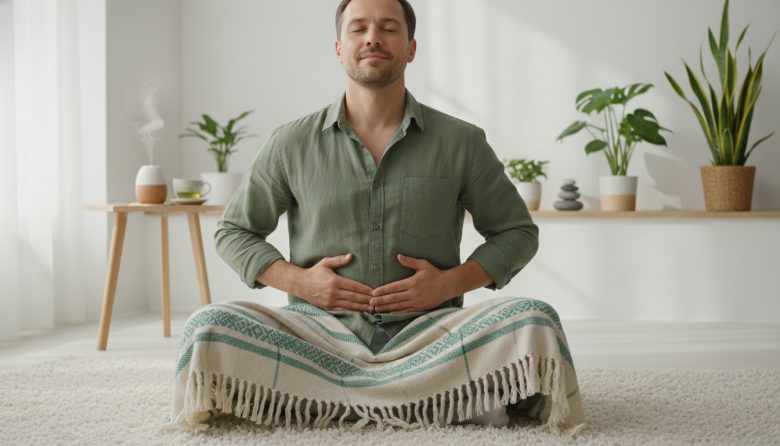
Rushed morning, heart racing from back-to-back meetings—I paused for a quick 4-7-8 breath cycle and felt my shoulders drop. That simple shift reminded me how breathwork fits into my busy days as a wellness coach. It offers quick calm moments without needing extra time or tools.
Breathwork techniques activate the parasympathetic nervous system, helping flip the switch from stress to rest. In my routine, I use them during commutes or before calls. Today, I’ll share six evidence-informed techniques: Box Breathing, 4-7-8 Breathing, Diaphragmatic Breathing, Alternate Nostril Breathing, Physiological Sigh, and Resonant Breathing. Each targets the stress response differently.
These practices may lower heart rate and ease tension in seconds. They draw from research on vagus nerve stimulation and heart rate variability. Try one today—note your mood or energy on a 1-10 scale afterward. Small experiments like this build lasting habits.
For deeper calm, pairing breathwork with a how to start a quick journaling habit for clarity often amplifies the effects, as noting thoughts post-breath helps process emotions.
How Breathwork Flips Your Stress Response in Seconds
Breathwork influences the autonomic nervous system, which controls fight-or-flight and rest-digest modes. Slow, intentional breaths tend to stimulate the vagus nerve, promoting parasympathetic activation. This may reduce cortisol levels and improve heart rate variability over time.
When stressed, shallow breathing keeps CO2 levels low, signaling danger to the brain. Deeper exhales balance this, calming the body quickly. Studies show techniques like these can lower heart rate within 30 seconds for many people.
In my day, a physiological sigh before lunch resets overwhelm from emails. It shifts focus from scattered thoughts to steady presence. These mechanisms make breathwork accessible for busy routines.
| Technique | Duration | Core Steps | Best For | Quick Benefit |
|---|---|---|---|---|
| Box Breathing | 1-2 minutes | Inhale 4, hold 4, exhale 4, hold 4; repeat 4-6x | High-pressure moments | Steadies racing mind |
| 4-7-8 Breathing | 1 minute | Inhale 4 nose, hold 7, exhale 8 mouth; 4 cycles | Pre-meeting anxiety | Melts jitters fast |
| Diaphragmatic Breathing | 2 minutes | Hand on belly, inhale to expand, exhale slowly; 10 breaths | Physical tension | Releases held stress |
| Alternate Nostril Breathing | 2-3 minutes | Close right nostril, inhale left; close left, exhale right; alternate | Mental scatter | Balances focus |
| Physiological Sigh | 30 seconds | Double inhale nose, long exhale mouth; 3-5x | Sudden overwhelm | Instant reset |
| Resonant Breathing | 5 minutes | Inhale 5, exhale 5; aim for 6 breaths/minute | Sustained calm | Boosts HRV |
This table lets you pick based on your moment—short for commutes, longer for evenings. I reference it during hectic days.
Box Breathing: Ground Yourself Amid Chaos
Sit or stand comfortably. Inhale through your nose for a count of 4, hold for 4, exhale through mouth for 4, hold for 4. Repeat 4 times.
Last week, traffic had my pulse up—I did this at a red light and arrived calmer. Navy SEALs use it for focus under pressure.
Try it now: After 4 cycles, rate your calm on 1-10. Track over a week to see patterns.
4-7-8 Breathing: Melt Away Pre-Meeting Jitters
Close eyes if possible. Inhale quietly through nose for 4, hold breath for 7, exhale fully through mouth for 8 with a whoosh. Do 4 cycles.
Before client calls, this eases my chest tightness. The extended exhale slows heart rate by engaging the vagus nerve.
Experiment tomorrow morning. Note energy shift—often, it carries through the day.
Diaphragmatic Breathing: Release Held Tension Anywhere
Place one hand on belly, one on chest. Inhale deeply through nose so belly rises (chest stays still), exhale slowly through pursed lips. Aim for 10 breaths.
During desk work, I notice shoulder hunch—this undoes it. It trains full lung use, reducing shallow stress breaths.
A gentle morning routine to start your day calmly with this sets a relaxed tone. Practice standing or lying down.
Alternate Nostril Breathing: Balance a Scattered Mind
Use right thumb to close right nostril, inhale left. Close left with ring finger, release right to exhale. Inhale right, switch—5 rounds per side.
Afternoons feel scattered; this recenters me. It may balance brain hemispheres for clarity. If congested, skip or go gentle.
Do it eyes closed. Follow with a mental check-in on focus level.
Physiological Sigh: Reset Overwhelm in One Breath Cycle
Inhale deeply through nose, quick second inhale to top off lungs, then long slow exhale through mouth. Repeat 3-5 times.
Neuroscientist Andrew Huberman highlights this for rapid calm—it mimics natural sigh to offload lung CO2. I use it mid-panic.
Perfect for 10-second breaks. Track if overwhelm drops faster with practice.
Resonant Breathing: Build Sustained Calm
Find a quiet spot. Inhale for 5 counts, exhale for 5, keeping smooth rhythm at about 6 breaths per minute. Continue for 5 minutes.
Evenings, this boosts my heart rate variability for better sleep prep. Research links it to optimal vagal tone.
Pair with hydration—try after reading about 10 easy ways to stay hydrated all day long, as fluids support breath efficiency. Use a timer app.
Safety Notes and When to Pause Breathwork
These techniques are often safe for most, but listen to your body. If dizzy or lightheaded, stop, sit, and breathe normally.
For asthma, pregnancy, or respiratory issues, consult a doctor first. Avoid forceful breathing to prevent hyperventilation. Start slow, personalize to your comfort.
Personalization matters—my tolerance grew with practice, but yours may vary. If anxiety persists, combine with professional support.
Frequently Asked Questions
Can breathwork help if I’m new to wellness practices?
Yes, these are beginner-friendly with no gear needed. Start with 1-minute sessions like physiological sigh. Many notice calm right away, building confidence gradually. Track simple signals like mood to stay motivated.
How often should I use these for best results?
Aim for 3-5 times daily in short bursts, or as stress arises. Consistency tends to enhance effects over weeks. Experiment to find your rhythm—mornings for some, evenings for others.
What if I feel lightheaded during a session?
Stop immediately, sit or lie down, and return to normal breathing. It may signal over-breathing; shorten holds next time. Hydrate and try gentler options like diaphragmatic.
Is breathwork enough for chronic anxiety?
It can help manage symptoms as part of a broader approach, but not a standalone fix. Pair with therapy or lifestyle tweaks. Noticeable relief often comes with regular use alongside other supports.
What’s the ideal time of day for quick breathwork?
Anytime works, but mornings reset circadian rhythm, afternoons combat slumps. Before bed aids sleep. Tailor to your stress peaks—track what boosts your energy most.
Pick one technique today, like Box Breathing, and try it 3 times this week. Jot energy or mood shifts in a note. These small steps create calm amid chaos—your routine will thank you.