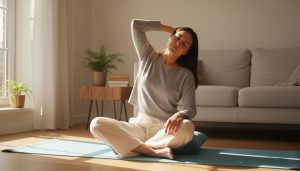
Picture this: you’re glued to your desk after a long day, shoulders creeping forward, neck craning toward your screen. That familiar slouch feels like a cozy default, but it quietly drains your energy and dims your mood. Good news—gentle posture shifts can help brighten your day without strain or strict rules.
Posture links directly to how your body feels, thanks to muscle balance and deeper breathing. When aligned, your spine supports easier circulation and less tension, often lifting your vibe. These small changes build confidence over time, like stacking easy wins.
Today, we’ll explore five practical tips: wall angels for shoulders, seated rolls for core, supine bridges for hips, breath-aligned pauses, and everyday cues. They’re designed for beginners, with visual steps you can snapshot for reference. Try one or two daily, track your energy or mood in a quick note, and experiment to see what clicks for you.
Slouching from desk life is common, compressing your chest and tightening your back. Yet, nudging toward alignment may ease that pull, fostering a lighter feel. Let’s dive into why these shifts matter and how to make them yours.
Why Gentle Posture Shifts Support Your Daily Energy
Slouching often compresses your lungs and tenses neck muscles, which can ramp up your stress response. Gentle alignment tends to open your chest, aiding deeper breaths and smoother circulation to your brain and limbs. This may help steady your energy throughout the day.
Gravity constantly pulls us forward, especially during screen time. Engaging your core lightly counters that, supporting your spine without force. Evidence-informed habits like these can promote better muscle balance over weeks.
Forward slumps may disrupt your circadian rhythm indirectly by increasing fatigue signals. Upright shifts often bring a subtle mood lift, as balanced posture eases shoulder knots. Start slow to feel these benefits build.
Safety / when to be cautious: These tips suit most people, but pause if you feel sharp pain. Ease in gently, and chat with a doctor for ongoing back issues. Listen to your body—it’s your best guide.
Reawaken Shoulders with Easy Wall Angels
Why it helps: Forward hunching tightens chest muscles, pulling shoulders inward. Wall angels stretch that area gently, promoting openness that may reduce upper back strain and improve arm swing.
Stand with your back against a wall, feet hip-width apart. Press your lower back, shoulders, and head lightly to the wall—imagine a gentle hug from behind.
Place arms at a “W” shape, elbows bent, hands near shoulders. Slide them slowly up to a “Y,” keeping contact with the wall, then lower. Hold the top for 10 seconds, repeat 5 times.
For variety, do seated versions at your desk: lean back in your chair, mimic the slide without a wall. Breathe steadily—inhale up, exhale down. Snap a before-and-after photo to see your shoulder freedom grow.
Practice 2-3 times daily; it takes under 2 minutes. Beginners, start with fewer reps to build comfort. You’ll likely notice lighter shoulders by week’s end.
Build Core Stability Through Seated Rolls
Why it helps: Weak deep abs let your spine sway, adding low-back load. Seated rolls wake those muscles softly, fostering stability that supports upright posture naturally.
Sit tall on your chair edge, feet flat, hands on thighs. Lengthen your spine as if a string pulls the crown of your head up.
Gently roll your upper body to one side, leading with ribs—keep hips steady. Return to center, then roll the other way. Do 5 slow rolls per side, breathing out on the roll.
Progress by adding a pause at each side, feeling your core engage. Pair with desk breaks for easy integration. Motivating tip: Imagine stirring a big pot smoothly.
Daily practice strengthens without gym time. Track how your sitting feels steadier. This builds quiet confidence in your midsection support.
Free Your Hips with Supine Bridges
Why it helps: Tight hip flexors from sitting tug your pelvis forward, curving your low back. Bridges release that gently, balancing hips to help your spine stack evenly.
Lie on your back, knees bent, feet flat hip-width. Arms rest by sides, palms down.
Exhale and lift hips softly, squeezing glutes lightly—no high arch. Hold 3-5 seconds, lower slowly. Aim for 8-10 reps.
Modify on a mat or carpet for comfort; add a block under sacrum for restful holds. Focus on the feel-good lengthening in front hips. Visual cue: hips like a gentle wave rising.
Do mornings or evenings, 3x weekly. Notice easier standing tall afterward. This hip freedom often sparks whole-body lightness.
Align Breath with Spine-Supporting Pauses
Why it helps: Shallow breaths slump ribs, misaligning over pelvis. Diaphragmatic styles stack them better, easing spinal load and calming nerves.
When considering how to practice deep breathing during busy days, try this: sit or stand tall, hand on belly.
Inhale for 4 counts, expanding sides and back—belly rises. Hold 7, exhale 8 through pursed lips. Repeat 4 cycles.
Pair with posture check: ears over shoulders, ribs soft. Do during calls or waits. Integrates seamlessly, like a reset button.
Build to 5 minutes daily. When exploring your 7-day gentle movement plan for beginners, weave this in for breath-posture synergy.
Embed Posture Cues in Everyday Movement
Why it helps: Repetition rewires brain patterns, making alignment automatic. Cues turn awareness into habit, sustaining energy without constant effort.
Check “ears over shoulders” hourly—use phone reminders. Gently tuck chin if forward.
Walk imagining a crown pull upward; swing arms freely. Stand from chairs with core light engage.
At mirrors, smile and align side view. Track in a journal: mood before/after cues. Small wins compound.
Link to routines like your simple 30-minute weekly plan for rest and movement. Experiment; adjust what fits your flow.
Your Posture Do’s and Don’ts Quick Guide
This table contrasts common pitfalls with gentle fixes, highlighting feel-good differences. Use it as a daily scan for quick wins.
Visual summary links back to our tips—print or screenshot for your space.
| Don’t (Common Pitfall) | Do (Gentle Fix) | Feel the Difference |
|---|---|---|
| Forward head poke | Wall angels or chin tuck | Easier neck, sharper focus |
| Rounded shoulders hunch | Seated core rolls | Lighter chest, steady energy |
| Tucked pelvis from tight hips | Supine bridges | Balanced low back, free stride |
| Shallow slumped breaths | 4-7-8 pauses | Calmer mind, open ribs |
| Forgetting during walks | Crown pull cues | Uplifted mood, fluid movement |
Refer often; it reinforces without overwhelm. Combine with tracking for personalized insights.
Frequently Asked Questions
How soon might I notice posture changes?
Changes vary by person—subtle energy lifts often appear in a few days with consistency. Habits may solidify in 2-4 weeks as muscles adapt. Track simple signals like mood or ease in sitting to gauge progress.
Is it safe if I have back discomfort?
These gentle tips are generally safe for mild discomfort, emphasizing slow starts. Stop if pain sharpens, and consult a professional for persistent issues. Prioritize your comfort every step.
How often to practice these tips?
Aim for 2-3 times daily, just 5 minutes total—consistency beats intensity. Weave into routines like desk breaks. Experiment to find your sweet spot.
Do I need equipment?
No equipment required; these are bodyweight-focused. A wall, chair, or mat optional for comfort. Keep it simple and accessible.
Can posture affect sleep or stress?
Better alignment may help via relaxed muscles and fuller breaths, potentially easing stress signals. Sleep quality can improve indirectly through less tension. Results vary, so note your own patterns.