Picture Sarah, a mom juggling work deadlines and school pickups, feeling drained by 3 p.m. every day. One week, she started with just 10-minute walks around the block after lunch. Soon, she noticed her energy steadying and evenings feeling less chaotic.
Gentle movement like this builds habits without the overwhelm of intense workouts. It taps into your body’s natural responses, easing stress and sparking strength over time. This 7-day plan offers a science-informed flow with daily variety—from simple walks to flowing stretches—plus easy tracking tips.
You don’t need hours or a gym; just a few minutes daily can shift how you feel. Start small today, maybe with a quick stroll, and watch the momentum build. Your body will thank you as energy and ease return.
The Gentle Science: How Easy Movement Eases Stress and Builds Strength
Gentle movement often supports endorphin release, those feel-good chemicals that can lift mood after a short walk. Circulation improves too, carrying oxygen to muscles and easing tension built up from sitting all day.
Muscle activation happens subtly, strengthening core and legs without strain. For example, a 10-minute walk can reduce cortisol, the stress hormone, helping you feel calmer by evening.
Over days, this creates a rhythm where your body anticipates movement, often leading to better sleep. Studies show consistent low-intensity activity tends to build resilience to daily pressures. It’s not about speed but steady progress.
Post-walk mood lifts are common, like feeling clearer-headed after breathing fresh air. This approach fits busy lives, often boosting focus without fatigue. Your nervous system shifts from fight-or-flight to rest-and-restore mode.
Gentle flows activate stabilizing muscles around joints, which may prevent aches over time. Hydration pairs well here, as movement encourages mindful sipping. Think of it as tuning your body like a well-oiled machine.
Week Zero: Simple Prep to Set Yourself Up Right
Grab comfy clothes that let you move freely, like soft leggings and a breathable shirt. A reusable water bottle keeps hydration handy, aiming for sips before and after.
Clear a small open space at home, about the size of a yoga mat. Pick up a simple mood journal—any notebook works—to note energy before and after sessions.
What to try:
- Test a 2-minute neck roll: Slowly tilt head side to side, breathing deeply.
- Practice standing tall: Align feet, roll shoulders back, hold for 30 seconds.
- Walk in place for 1 minute, noticing your breath sync with steps.
These prep steps build confidence without pressure. They often ease you into the plan smoothly.
Your 7-Day Schedule at a Glance
This plan progresses gently from walking basics to flowing movements, building familiarity each day. Each session lasts 10-20 minutes, with pro tips for ease. Use the table below for a quick scan, then dive into details.
| Day | Focus Area | Key Movements (pick 2-3) | Duration | Pro Tip |
|---|---|---|---|---|
| Day 1 | Easy Walking | March in place, slow steps forward | 10 min | Breathe deeply with each step |
| Day 2 | Arm Circles | Walking + gentle arm swings, shoulder rolls | 12 min | Keep movements loose, smile |
| Day 3 | Leg Lifts | Walk + side leg lifts, knee hugs | 15 min | Hold a wall for balance if needed |
| Day 4 | Full-Body Flow | Walk to gentle torso twists, arm reaches | 15 min | Flow like water, no rush |
| Day 5 | Core Awareness | March + seated twists, standing cat-cow | 18 min | Engage belly softly |
| Day 6 | Balance Builds | Walk + tree pose hold, heel-to-toe line | 20 min | Focus on one point ahead |
| Day 7 | Integrate & Flow | Full sequence mix, free gentle dance | 20 min | Celebrate with deep breaths |
After reviewing the roadmap, let’s break down each day with real-life tweaks and encouragement. This keeps things approachable as you go.
Day 1: Easy Walking. Start outdoors if possible, or pace your living room. Sarah felt her tension melt after five minutes of steady steps. Modify by slowing pace; aim for a natural rhythm.
Feel your feet connect with the ground. This day often sparks that first energy shift. End with a seated stretch, arms overhead.
Day 2: Arm Circles. Add gentle swings while walking to loosen upper body. Imagine shaking off the day’s weight. If shoulders feel tight, do half-circles first.
A reader shared how this eased desk hunch by noon. Pair with shoulder rolls for full release. Notice freer breathing now.
Day 3: Leg Lifts. Incorporate side lifts during walks to wake hips. Hug knees gently to release lower back. Use a chair for support initially.
This builds leg strength subtly, often making stairs easier. Keep it playful, like a fun march. Hydrate well afterward.
Day 4: Full-Body Flow. Transition walks into twists and reaches, linking breath to motion. Move like a slow wave across the room. Shorten if energy dips.
Many find this day boosts circulation noticeably. Experiment with music for flow. Your body adapts quickly here.
Day 5: Core Awareness. March in place, then twist seated or standing with cat-cow arches. Soften the belly draw-in. A wall can guide posture.
This often steadies mood mid-week. Readers report better sitting comfort post-session. Build from prior days’ ease.
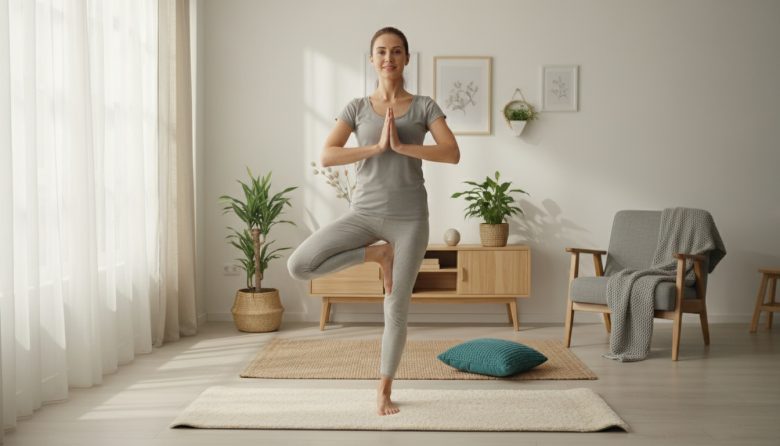
Day 6: Balance Builds. Add tree pose—foot to ankle, hands at heart—after walking. Practice heel-toe walks for stability. Gaze steady ahead.
Even wobbles strengthen focus. This preps for daily confidence. Celebrate small holds.
Day 7: Integrate & Flow. Mix favorites into a personal sequence, end with free movement. Dance gently if it feels right. Reflect on week’s shifts.
By now, movement feels familiar. You’ve built a gentle habit foundation.
Track Wins Daily: Simple Signals Like Energy and Ease
Before each session, rate mood and energy on a 1-10 scale in your journal. Note post-movement changes, like lighter steps or clearer thoughts. This tracking reveals patterns without effort.
Tweak as needed—shorten a day if busy, or add a favorite. One beginner saw energy rise from 4 to 7 by week’s end. Experiment mindfully.
Combine with evenings incorporating how to create a calming evening wind-down routine for amplified rest. Log sleep quality too. Small signals guide your next steps.
Share wins mentally: “I moved today.” This reinforces the habit loop.
Safety First: Listen to Your Body’s Cues
Differentiate effort from pain—mild warmth is normal, sharp twinges mean stop. Breathe steadily; never force a pose. Hydrate before, during, and after.
If you have conditions like joint issues, consult a doctor first. Start even gentler if needed. Rest days are part of listening well.
Post-movement, try 6 breathwork techniques for quick calm moments to settle. This keeps things sustainable.
Week 2 and Beyond: Scaling Up Without Strain
Repeat the plan, adding 2-3 minutes per day or a favorite move. Customize with outdoor walks or family joins. Variety prevents boredom.
After two weeks, notice sustained energy. Blend in how to brew soothing herbal teas in minutes post-session for recovery. Build steadily for long-term ease.
Frequently Asked Questions
Can I start this if I’m completely out of shape or overweight?
Yes, this plan is designed for absolute beginners, emphasizing consistency over intensity. Focus on how your body feels each day, tracking subtle energy shifts like easier breathing or brighter mood. Modify movements—march seated if standing feels tough—and celebrate showing up; bodies adapt gradually with gentle persistence.
What if I miss a day or feel sore?
Missing a day is fine; resume without guilt, as habits rebuild quickly. Gentle soreness from new movements often fades in 24-48 hours with rest and light walks. If sharp pain lingers, pause and rest fully, prioritizing recovery over schedule.
Do I need any equipment or a gym?
No equipment is required beyond comfy shoes and optional mat or chair for support—everything uses bodyweight in small spaces. This keeps it accessible for home or travel. A water bottle and journal enhance the experience without extras.
How do I know it’s helping?
Track simple signals like mood lifts, better sleep, or handling stairs with less effort; use 1-10 ratings pre/post sessions. Variations exist, but many notice steadier energy within a week. Journal patterns to confirm personal progress.
Is this safe with joint issues or medications?
Gentle movements like these are often suitable, but consult your doctor for tailored advice, especially with joint concerns or meds affecting balance. Start extra slow, listen to cues, and stop if discomfort arises. Professional input ensures it fits your health picture safely.