Ever feel a midday slump, like your energy dips or your skin feels tighter than usual? These could be subtle signs of mild dehydration, which happens to many of us without noticing. Your body is about 60% water, and even a small drop—like 1-2% from a busy day—can fog your focus, dampen your mood, and slow your reactions.
Hydration keeps your cells humming, supports your brain's clarity, and steadies your stress response by maintaining blood volume for better oxygen flow. The good news? You don't need to chug gallons or set endless alarms. These five effortless strategies draw from habit science, like cue-response pairing, to weave water into your day naturally.
Picture starting small: track how your energy or mood shifts after trying one. Maybe note it in your phone at day's end. Ready to feel steadier? Pick one way to experiment with today and see the difference.
Kickstart Mornings with an Overnight Water Habit
Why It Helps
Overnight, your body loses water through breathing and subtle sweating during sleep, often leaving you mildly dehydrated by morning. This can throw off your circadian rhythm, making it harder to feel alert. Rehydrating early jumpstarts kidney function and brain signaling for a smoother wake-up.
It tends to lift morning fog because water helps regulate cortisol, your wake-up hormone, without extra effort once set up.
What to Try
- Fill a glass and place it on your bedside table before bed—your sleepy self grabs it first thing.
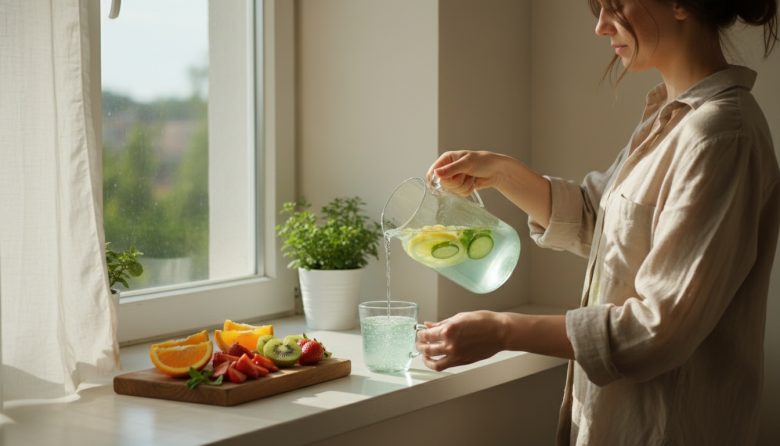
- Prep an infused pitcher in the fridge overnight with cucumber slices for a refreshing twist that invites sips.
- Pair it with your gentle morning routine to start your day calmly, sipping as you stretch or brush teeth.
- Freeze berries in ice cube trays for your water; they melt slowly, adding flavor as you drink.
These cues make hydration automatic, building momentum for the day. Many notice sharper focus within a week.
Snack on Juicy Fruits and Veggies for Passive Hydration
Why It Helps
Foods like watermelon or cucumber pack 90-96% water, delivering hydration alongside fiber and electrolytes without you thinking about drinking. This passive approach absorbs steadily through digestion, stabilizing energy better than gulps alone. It also curbs dry snack cravings that worsen dehydration.
Your gut handles food water efficiently, often providing 20-30% of daily needs with tasty bonuses like vitamins.
What to Try
- Slice watermelon into grab-and-go chunks; one cup equals about a glass of water.
- Keep celery sticks with nut butter handy—crunchy hydration that satisfies between meals.
- Chop bell peppers for salads; their sweet juice sneaks in fluids effortlessly.
- Opt for oranges or strawberries from the top 10 light snacks for healthy cravings list when hunger hits.
Start with one fruit a day; it layers hydration into eating habits seamlessly.
Infuse Plain Water with Natural Flavors Effortlessly
Why It Helps
Plain water can feel boring, but mild natural flavors trigger sensory cues that prompt more sips without force. This leverages your brain's reward system, making hydration enjoyable and habitual. Herbs and fruits add subtle antioxidants too, supporting overall wellness.
It often increases intake by 20-50% because taste variety fights boredom effectively.
What to Try
- Muddle lemon slices and mint in a jar overnight for a spa-like sip ready at dawn.
- Add frozen berries to your bottle; they chill and flavor as they thaw during the day.
- Try cucumber-lime combos in a pitcher—refreshing for desk or gym use.
- Steep ginger slices for a gentle zing that aids digestion alongside hydration.
- Experiment with basil and watermelon cubes for a summery boost any season.
Rotate flavors weekly to keep it fresh and fun.
Habit-Stack Sips to Meals and Breaks
Why It Helps
Linking water to existing routines—like meals or bathroom visits—uses your brain's habit loop: cue, routine, reward. This builds automaticity without new willpower. It spaces intake evenly, preventing dehydration spikes.
Studies on habit stacking show it can double daily water over time through simple pairings.
What to Try
- Sip a full glass before every meal; it enhances fullness and digestion naturally.
- Keep a bottle by your coffee spot—alternate sips to offset caffeine's mild diuretic pull.
- After using the bathroom, reach for water; it replaces what you just lost.
This method fits any schedule, turning routines into hydration allies.
Swap Dehydrators for Gentle Alternatives
Why It Helps
Caffeine and salty foods act as mild diuretics, increasing urine output and net fluid loss over time. Swapping for gentler options preserves hydration balance without cutting favorites entirely. Herbal teas or decaf provide ritual without the drain.
It can help maintain steady energy by minimizing those cumulative effects.
What to Try
- Switch one coffee to herbal tea like chamomile; sip slowly for calm focus.
- Trade salty chips for air-popped popcorn with herbs—less sodium, similar crunch.
- Choose sparkling water over soda; fizz satisfies without sugar's dehydrating draw.
Safety / When to Be Cautious
These swaps suit most people, but if you have heart or kidney conditions, check with your doctor on caffeine limits. Overdoing any diuretic shift is rare—listen to your body.
Keep a Marked Bottle as Your Visual Sidekick
Why It Helps
A time-marked bottle acts as an environmental cue, nudging subconscious sips throughout the day. Visual progress—like lines for 10am, 2pm—taps into goal-tracking psychology for steady pacing. It reduces decision fatigue around drinking.
Users often hit targets effortlessly as the bottle becomes a desk or bag constant.
What to Try
- Buy or DIY a bottle with hourly lines using tape and a marker.
- Place it front-and-center on your desk or in your bag's side pocket.
- Set phone reminders only if needed, but let the bottle lead visually.
- Refill at set spots like kitchen sink to reinforce the loop.
Watch how this simple visual shifts your day.
Quick Food Swaps for Built-In Hydration
| Usual Dry Choice | Hydrating Swap | Approx. % Water | Daily Impact |
|---|---|---|---|
| Chips | Cucumber slices | 96% | 1 cup = 8oz water |
| Pretzels | Watermelon chunks | 92% | Boosts electrolytes naturally |
| Crackers | Celery sticks | 95% | Fiber slows dehydration |
| Dry cereal | Strawberries | 91% | 1 cup adds vitamin C + fluids |
| Popcorn (buttered) | Bell pepper strips | 92% | Antioxidants with crunch |
| Granola bar | Orange segments | 86% | Portable hydration hit |
This table highlights easy switches that add water without changing much. Use it as a fridge cheat sheet for quick picks.
Across these ways, overhydration is rare—your thirst and clear urine guide you best. If you're very active or in heat, add a bit more. These tips stay gentle for everyday use.
Try tracking your mood and energy for a week using one or two strategies. Jot notes like "felt steadier post-lunch" to tweak what works. Small wins build lasting hydration ease.
Notice drier mouth or darker urine? These cues signal when to sip more, personalizing your approach.
FAQ
How much water does a typical adult need daily?
Needs vary by body size, activity, and climate—often around 8-10 cups for many adults. Thirst is your main guide, backed by urine color: pale yellow means you're good. Experiment and adjust based on your signals like energy levels.
Can food alone keep me hydrated?
Food can contribute 20-30% of daily water for most people, especially with juicy picks like fruits. It pairs best with sips for full coverage, as absorption differs. Individual needs vary, so blend both for balance.
What if I forget to drink more?
These habit cues—like bottles or stacks—help override forgetfulness gently. Start with just one, tracking simple signals like afternoon energy. Over time, they become second nature without reminders.
Are infused waters as good as plain?
Yes, for hydration and often better with natural add-ins like fruit for flavor and minor antioxidants. Skip added sugars to keep benefits pure. They encourage more intake through enjoyment.
Should I worry about hydration with medications?
Common diuretics or others may increase needs—chat with your doctor for tailored advice. These effortless tips are generally safe and supportive. Monitor how you feel and adjust accordingly.