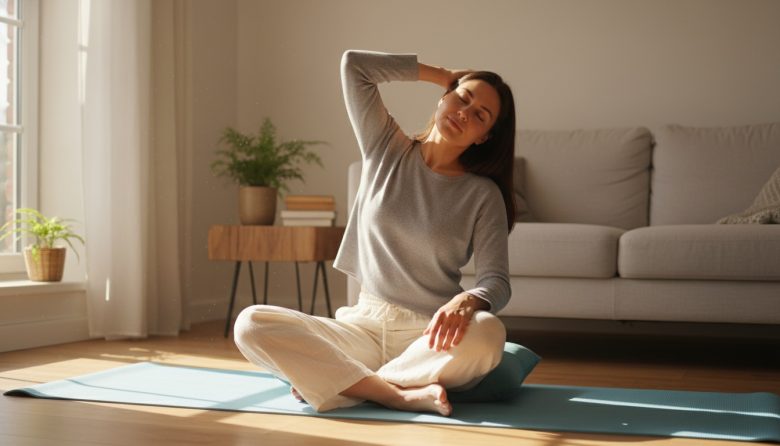
After a full day at my desk, replying to emails and reviewing notes, my shoulders often tighten up like knotted ropes. It's a familiar ache from years of screen time and occasional stress buildup. Last week, as the evening sun dipped low, I paused my routine and tried a simple ear-to-shoulder tilt—tension melted in seconds. These 7 gentle stretches have become my go-to for easing everyday strain without needing a full workout. They fit into busy moments, like between meetings or before bed, offering quick relief to common spots like neck, back, and hips. Many find they breathe easier and move freer after just a few minutes. I'll walk you through each one step by step, drawing from my daily practice.
Imagine slipping them into your afternoon slump or wind-down hour. They target holding patterns we all develop from sitting, scrolling, or carrying mental loads. Over time, they can help shift your body's stress response toward calm. Ready to try? Let's start with why they work so well.
Why Gentle Stretches Often Calm the Body's Tension Response
When stress hits, our muscles tend to shorten and grip, especially around the neck and shoulders. This is the body's protective response, holding us in fight-or-flight mode longer than needed. Gentle stretches counteract this by lengthening those fibers, signaling the nervous system to relax.
Improved blood flow follows, delivering oxygen and easing built-up lactic acid from prolonged postures. Think of post-desk work: hours of forward head position strains upper back muscles. Studies on similar practices show they often lower cortisol while boosting feel-good endorphins.
In my routine, I notice better sleep after evening stretches, as they unwind the day's physical story. Light exposure during the day pairs nicely, but these moves directly address muscle memory. They may help regulate the autonomic nervous system, promoting parasympathetic rest.
For relatable scenarios, consider driving commutes or parenting lifts—tight hips pull on the lower back. Stretching interrupts that cycle, fostering resilience. When combined with hydration habits, effects tend to compound over weeks.
Neck and Shoulder Releases for Screen-Time Strain
Screen time often leaves neck and shoulders screaming for relief. These first two stretches target that precisely, with easy steps anyone can follow at their desk or standing.
Stretch 1: Ear-to-Shoulder Tilt
- Sit or stand tall, keeping spine neutral.
- Tilt your right ear toward your right shoulder, keeping the left shoulder down—no forcing.
- Hold for 20-30 seconds, breathing deeply; switch sides.
This opens the scalene muscles along the neck, easing headaches from poor posture. I do it mid-morning when scrolling emails tightens me up.
Stretch 2: Chin Tuck with Gentle Rotation
- Gently draw chin back toward neck, creating a subtle double chin.
- Rotate head slowly to the right, gaze over shoulder; hold 15-20 seconds.
- Return center, repeat left; 2-3 reps per side.
It realigns the cervical spine, countering forward head habits. Many report looser traps after a few tries.
Upper Back Openers to Counter Hunching Habits
Hunching over laptops rounds the upper back, compressing the thoracic spine. These openers restore space, improving posture without strain. Transition smoothly from neck work here.
Stretch 3: Thread-the-Needle Twist
- Start on all fours; slide right arm under left, resting shoulder on floor.
- Extend left arm forward or overhead for deeper feel; hold 20-30 seconds.
- Switch sides, 2 reps each.
This twists gently through rhomboids and rotator cuff, relieving desk hunch. In my practice, it unsticks mid-back stiffness from note-taking sessions.
Stretch 4: Eagle Arms Bind
- Cross right arm over left at elbows, wrapping forearms if possible.
- Lift elbows and sink shoulders; hold 20 seconds, breathing into upper back.
- Unwind, switch arms; 2-3 rounds.
It squeezes shoulder blades together, opening chest tightness. Feels great after long calls.
Hip and Lower Back Soothers for Sitting All Day
Tight hips from prolonged sitting tug on the lower back, creating a domino of discomfort. These stretches release the glutes and piriformis, linking hips to spine health. Build on upper body ease with these.
Stretch 5: Seated Figure-Four
- Sit tall; cross right ankle over left knee.
- Gently press right knee down or lean forward slightly; hold 30 seconds.
- Switch legs, 2 reps per side.
This soothes outer hip rotators, often culprits in sciatica-like twinges. Perfect for office chairs.
Stretch 6: Spinal Twist on Floor
- Lie on back, hug right knee to chest, then drop it across body to left.
- Extend right arm out, gaze right; hold 30 seconds.
- Switch, 2-3 times each side.
It wrings out lumbar tension, aiding digestion too. I save it for evenings.
Full-Body Anchors: Legs and Spine Integration
To tie it all together, this final stretch integrates legs, hips, and spine for whole-body release. It grounds the sequence, enhancing circulation from head to toe.
Stretch 7: Forward Fold with Wide Knees
- Stand feet wider than hips, knees soft; hinge at hips, folding forward.
- Let arms hang or rest on shins; nod head gently yes/no for neck bonus.
- Hold 30-45 seconds, roll up slowly; repeat 2 times.
Hamstrings and calves lengthen, calming the entire posterior chain. In my routine, it caps the set beautifully, leaving me lighter.
Your 7-Stretch Tension Relief Guide
For quick daily reference, here's a scannable summary. Use this table whenever you need a reset—print it or save to your phone.
| Stretch Name | Target Areas | Key Steps | Hold Time & Reps | Quick Tip |
|---|---|---|---|---|
| Ear-to-Shoulder Tilt | Neck, upper traps | Tilt ear to shoulder, opposite shoulder down | 20-30 sec, 2-3/side | Breathe deeply; no shrugging |
| Chin Tuck with Rotation | Cervical spine, sides of neck | Chin back, rotate gaze over shoulder | 15-20 sec, 2-3/side | Keep it subtle—avoid crunching |
| Thread-the-Needle Twist | Upper back, shoulders | Thread arm under, rest shoulder down | 20-30 sec, 2/side | Extend top arm for depth |
| Eagle Arms Bind | Shoulder blades, chest | Cross arms, lift elbows | 20 sec, 2-3/arm | Sink shoulders away from ears |
| Seated Figure-Four | Hips, glutes | Ankle over knee, press gently | 30 sec, 2/side | Sit tall for back support |
| Spinal Twist on Floor | Lower back, obliques | Knee across body, arm out | 30 sec, 2-3/side | Keep shoulders grounded |
| Forward Fold with Wide Knees | Hamstrings, full spine | Fold forward from hips, knees soft | 30-45 sec, 2x | Bend knees more if tight |
This overview makes sequencing simple. Notice how targets overlap for cumulative calm.
Safety Notes and Signs to Modify or Skip
Listen to your body: a gentle stretch sensation is good, sharp pain is not. Ease in slowly, especially if new to movement. Breathe steadily to avoid holding breath.
If you have recent injuries, disc issues, or pregnancy, consult a doctor first. Modify by shortening holds or using props like a chair. Start with 1-2 stretches daily to build tolerance.
Those with vertigo skip rotations; seated versions work for balance concerns. When in doubt, less is more—your body will guide you.
Frequently Asked Questions
How often can these stretches help with tension?
Daily use often brings the most relief, even 5-10 minutes split across the day. Some notice benefits from 3-4 sessions weekly, depending on lifestyle. Experiment to find your rhythm—mornings for prevention, evenings for release.
Consistency tends to amplify effects over time, as muscles adapt. Track how tension shifts with frequency.
Do I need equipment or a yoga mat?
No, these are designed for bare spaces—chair, floor, or standing. A mat adds cushion for floor poses if you prefer. Wall support works for balance in tilts or folds.
Keep it accessible; household items like a towel substitute if needed.
What if I feel pain during a stretch?
Stop immediately—back off to a milder version or skip it. Pain signals overload, unlike the mild pull of a good stretch. Tomorrow, try shorter holds.
Warm up with walking first if muscles feel cold. Persistent pain warrants professional check.
Can these fit into a busy workday?
Absolutely—do neck tilts at your desk or figure-four in meetings. Full sequence takes 10 minutes; pick 2-3 for quick breaks. I slot them post-lunch to combat slump.
They boost focus too, making time investment worthwhile.
How will I know if they're working for me?
Notice easier movement, less daily ache, or improved mood post-practice. Track simple signals like shoulder comfort or sleep quality over a week. For deeper insight, start a quick journaling habit for clarity to log patterns.
Pair with 5 everyday foods for natural energy boosts to sustain gains. Energy and tension levels often reveal progress first.
Try one stretch right now—note your tension before and after. Experiment over days, adjusting as feels right. These have eased my routine burdens; they might smooth yours too. Share what works in the comments if inclined.