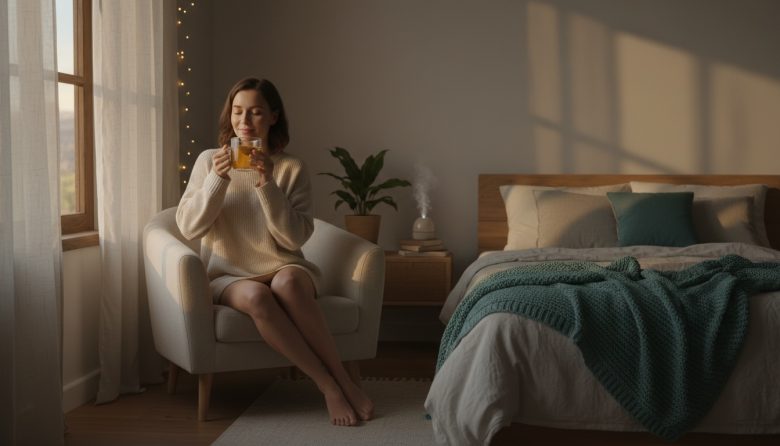
Struggling to unwind after a long day? Many of us toss and turn, minds racing with tomorrow’s to-do list, while our bodies fight off built-up tension. The good news is that a simple evening relaxation plan can support your natural sleep signals without fancy gadgets or strict rules.
This approach draws on your body’s circadian rhythm, the internal clock that cues rest when darkness falls. By easing into relaxation 60 to 90 minutes before bed, you often help lower stress hormones and invite deeper sleep. You’ll find clear, small steps here—like dimming lights, gentle stretches, and quick journaling—that fit busy evenings.
I’ve pieced this together from what works in real life, like noticing how a warm tea and five minutes of breathing shift my own wind-down. No overhauls needed; start with one or two ideas tonight. Let’s build a routine that feels good and supports restful nights.
Why Evening Rituals Help Sync Your Body’s Sleep Signals
Your body thrives on predictable cues to shift from day mode to sleep mode. Evening rituals often support this by calming the stress response, which can keep cortisol levels high and block melatonin, the hormone that signals it’s time to rest.
Think of the post-dinner slump many feel around 8 PM—that’s your circadian rhythm nudging you toward rest. Gentle habits like lowering lights or sipping herbal tea tend to amplify this, helping melatonin rise naturally. Over time, consistency may strengthen these signals, leading to easier sleep onset.
In one common scenario, someone skipping screens after dinner reports falling asleep faster, waking more refreshed. These rituals don’t force sleep but create conditions where it flows more readily.
Dim the Lights and Screens to Ease Into Rest Mode
Light exposure, especially blue light from screens, can trick your brain into thinking it’s daytime, delaying melatonin production. Starting an hour before bed, dimming lights helps your eyes and brain ease into rest mode.
Try these three ideas to make it simple:
- Switch to warm bulbs or lamps around 7 PM; this soft glow supports your natural wind-down.
- Use blue-light filters on devices or apps like f.lux if work lingers; even 30 minutes helps.
- Opt for candlelight or a reading lamp for books—cozy and screen-free.
A friend who reads by lamplight instead of her phone now drifts off in half the time. Experiment with timing to see what dims your evening best.
Gentle Movement and Breathing to Release Built-Up Tension
Held tension from the day often lingers in muscles and breath, revving your nervous system. Gentle movement and breathing can activate the parasympathetic response, promoting calm without overstimulating.
Here are four actionable practices, each under 10 minutes:
- Do three yoga stretches: child’s pose, legs-up-the-wall, and seated forward fold to release hips and back.
- Practice 4-7-8 breathing—inhale for 4, hold 7, exhale 8—for three rounds to slow your heart rate.
- Try a body scan: lie down, tense and release each muscle group from toes to head.
- Walk slowly around your room, shaking out arms and legs like shedding the day.
For quick calm moments, techniques from 6 Breathwork Techniques for Quick Calm Moments pair well here, especially the evening ones. I notice my shoulders drop after just the body scan, making bed feel inviting.
Soothing Herbal Choices and Light Snacks for Stable Blood Sugar
Avoiding caffeine after noon and choosing light options keeps blood sugar steady, preventing wake-ups. Herbal teas and snacks with magnesium often soothe without spiking energy.
Three easy tries:
- Brew chamomile or valerian tea—warm and calming, sip slowly 90 minutes before bed.
- Snack on a handful of almonds or banana slices; their magnesium supports muscle relaxation.
- Pair with hydration tweaks from a 10-Day Hydration Plan with Easy Food Swaps, like cucumber water, to stay balanced.
One reader swapped coffee for tea and slept through the night for the first time in weeks. Keep portions small to aid digestion.
Journaling Prompts to Offload Tomorrow’s Worries
Mind chatter often blocks sleep; journaling offloads it, clearing mental space. This simple act tends to reduce rumination, letting your brain relax.
Pick three to four prompts for five minutes:
- List three gratitudes from today—what went well?
- Brain-dump tomorrow’s tasks: write them down, then close the notebook.
- Body check-in: note tensions and affirm release.
- Positive close: one kind thought for yourself.
After journaling, many find worries fade, sleep comes quicker. It’s like giving your mind permission to pause.
Your 5-Step Evening Wind-Down Sequence
This timed sequence guides you from 8 PM to bedtime, blending the ideas above. Adjust times to your schedule and track how you feel each morning.
- 8 PM: Environment Prep—Dim lights, set devices to night mode, brew tea. Create a cool, dark space to signal rest.
- 8:30 PM: Body Release—Do stretches or breathing for 10 minutes. Notice tension melt away.
- 9 PM: Nourish Gently—Sip tea, have a small snack. Stay hydrated without excess.
- 9:20 PM: Mind Offload—Journal prompts quickly. Let go of the day.
- 9:45 PM: Final Ease—Body scan in bed, lights out by 10 PM. Experiment and note sleep quality.
Start small—try steps 1 and 5 first. Track energy and mood to tweak what works for you.
Safety Notes and Listening to Your Body’s Cues
These steps suit most, but pause if you notice discomfort or new sleep issues. Consult a doctor for persistent problems or if trying herbs with medications.
Personalize based on your signals—some thrive earlier, others later.
Ready to ease into better rest? Pick one step tonight, note how you sleep, and build from there. Small changes often add up to refreshed mornings.
FAQ
How long before bed should I start this relaxation plan?
Often 60 to 90 minutes works well for many, giving time for cues to settle. It varies by person—some need two hours, others 45 minutes. Track your sleep onset to find your sweet spot.
Can I do this if I have insomnia?
This may complement other strategies by supporting relaxation, but it’s not a standalone fix. If insomnia persists beyond a few weeks, see a doctor for tailored advice. Consistency helps, but listen to professional guidance.
What if I can’t avoid screens in the evening?
Gradual swaps like audio books or e-ink readers reduce blue light impact. Use filters and keep sessions short. Over time, aim to phase out for better results.
Will herbal teas interfere with medications?
Common ones like chamomile are often safe, but check with your doctor, especially for blood thinners or sedatives. Start with one cup and monitor. Safe options vary by individual health.
How do I know it’s working?
Look for signals like falling asleep faster, fewer wake-ups, or feeling refreshed. Give it 1-2 weeks of tracking mood and energy. Adjust as needed—results build gradually.