The Short Answer: A Nap Can Be a Stress Reset, Not Just a Sleep Aid
Yes, a short nap of 15 to 20 minutes can relieve stress, but only if you approach it as a deliberate ritual rather than a desperate collapse. The difference is intention. When you use a nap to interrupt a stress spiral, you are not just sleeping; you are actively shifting your nervous system from a state of threat to a state of safety. This article walks you through a specific, three-part protocol designed to do exactly that.
I have used this method for years, both personally and with clients who struggle with high-pressure jobs and chronic anxiety. The standard advice about napping - keep it under 30 minutes, nap before 3 PM - is technically correct, but it misses the emotional mechanics. You cannot just lay your head down and expect your brain to switch off when your mind is racing. You need a bridge. This protocol is that bridge.
Why a Short Nap Works for Stress Relief (The Science, Simplified)
Most articles cite the cortisol-lowering effects of sleep, but let us get more specific. When you are stressed, your sympathetic nervous system (the fight-or-flight mode) keeps your adrenal glands pumping out cortisol and adrenaline. A short nap allows your parasympathetic nervous system (the rest-and-digest mode) to take over, even if only for a few minutes.
A 2019 study published in the journal Hormones and Behavior found that a brief nap during an acute stressor improved negative affect and reduced subjective stress levels. The key finding is that the nap did not just make participants feel less tired; it made them feel less reactive to the stressor itself. That is a critical distinction. You are not just adding energy; you are building a buffer against the next wave of stress.
The Cortisol and Nap Length Connection
There is a sweet spot for stress relief. A 10-minute nap can boost alertness, but it is often too short to allow the body to fully drop its stress hormones. A 90-minute full sleep cycle allows for deep REM sleep, which is excellent for emotional processing, but it is impractical for most people during a workday and can cause sleep inertia - that groggy, disoriented feeling that makes you want to crawl back under the desk.
The 15 to 20-minute window is the muscle memory of napping. It is enough time to move through light sleep stages (N1 and N2) without entering the deep slow-wave sleep (N3) that causes grogginess upon waking. In stage N2, your body temperature drops and your heart rate slows. This is the physiological definition of 'downshifting.' You are giving your body a tangible signal that the danger is over.
The Missing Link: Napping as a Mindfulness Practice
Here is the thing nobody tells you about stress naps: they fail if you approach them with the same frantic energy you are trying to escape. I learned this the hard way. When I first tried to nap away a particularly bad bout of work anxiety, I set my phone alarm, closed my eyes, and immediately started replaying the meeting I had just messed up. I spent the entire 20 minutes mentally arguing with my boss, and I woke up feeling worse than I did before I laid down.
The problem was that I was treating the nap as a passive escape. A stress reset protocol requires an active transition. You are not just stopping work; you are actively signaling to your nervous system that it is safe to switch off. This involves a pre-nap breathing exercise to lower the heart rate, a specific duration to avoid sleep inertia, and a post-nap grounding routine to carry the calm back into your day.
The Stress Reset Protocol: Step-by-Step Guide
This is the actionable framework. It takes about 25 minutes total, but the nap itself is only 20 minutes. The magic is in the margins. Follow these three phases in order.
Phase 1: The Pre-Nap Downshift (2-3 Minutes)
Do not get into bed or put your head on your desk until you have done this. The goal is to interrupt the stress feedback loop before you close your eyes. Sit upright in a chair or on the edge of your bed. Place one hand on your chest and one on your stomach.
Breathe in through your nose for a count of 4, focusing on expanding your stomach, not your chest. Hold for a count of 4. Exhale slowly through your mouth for a count of 6. The longer exhale is the critical part. It activates the vagus nerve, which is the primary nerve of your parasympathetic nervous system. This triggers a relaxation response that physically slows your heart rate.
Repeat this cycle for at least 2 minutes. If you are really wound up, do it for 5 minutes. You will know you are ready when your breathing feels natural and you no longer feel the urge to glance at your phone. If you are struggling to focus, count your breaths. Distraction is normal; the act of returning to the count is the practice. This principle is similar to what we discuss in our quick tips to reduce stress in daily life, but here we are applying it as a direct precursor to sleep.
Phase 2: The Nap Itself (15-20 Minutes)
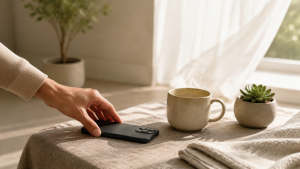
Now, lie down or set a timer. Use a physical alarm clock or the alarm on your phone, but set it for 20 minutes maximum. If you are using your phone, put it face down so you cannot see notifications. The goal is to avoid checking the time. A 20-minute nap typically takes about 5 minutes to fall asleep, giving you roughly 15 minutes of actual sleep. This is the ideal window.
Here is a mistake I see constantly: people set the alarm for 30 minutes, but they spend the first 10 minutes stressing about falling asleep. That is a waste. By setting a 20-minute timer, you remove the pressure. If you do not fall asleep, you still get the restorative benefits of quiet rest and the deep breathing. The rest period alone can lower blood pressure. If you do fall asleep, the alarm will wake you during light sleep, preventing the groggy hangover.
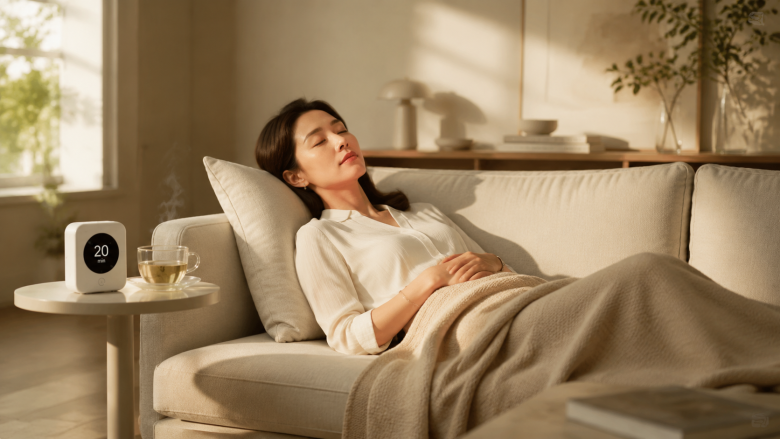
If you are at work, a desk nap is viable. Put your head down on a folded jacket or a travel pillow. If you are at home, a darkened room is better. Use an eye mask if you have one. The key is to eliminate light, as it suppresses melatonin and keeps your brain in an alert state. If you wear a smartwatch, put it in sleep mode or airplane mode. The vibrations from notifications will pull you back into the stress loop.
Phase 3: The Post-Nap Grounding (2-3 Minutes)
This is the phase that most people skip, and it is the reason so many people feel worse after a nap. When your alarm goes off, do not jump up and grab your coffee. Your nervous system is just coming out of a relaxed state. If you immediately return to your email inbox, your brain will perceive that as a threat, and your cortisol will spike right back up to pre-nap levels.
Instead, follow this sequence. First, sit up slowly and drink a glass of water. Dehydration can mimic fatigue, and rehydrating helps your circulatory system get back to normal. Second, do a light stretch. Reach your arms overhead, roll your shoulders, and gently tilt your neck side to side. This moves blood through your muscles and wakes up your body without a jolt. Third, think one positive thought. It does not have to be profound. It can be, 'I am hydrated and I have clean sheets.' This single thought is a cognitive anchor. It tells your brain that the environment is safe enough for positive processing.
I have a client who calls this 'the golden minute.' She uses the time to look out the window and focus on a distant object, which helps reset her visual focus and attention. This grounding phase is the difference between a nap that leaves you feeling refreshed and a nap that leaves you feeling disoriented. It is the skill that makes the entire protocol sustainable.
Why Napping Is Better Than Caffeine for Stress
When stress hits, most people reach for a second cup of coffee. Caffeine is a stimulant that blocks adenosine, the chemical that makes you feel sleepy. This works for alertness, but it does nothing to lower cortisol. In fact, caffeine can increase cortisol levels, especially if consumed in the afternoon. This creates a vicious cycle: you are sleepy because you are stressed, but the caffeine makes you feel more anxious and jittery.
A short nap addresses the root cause. It allows your brain to clear adenosine naturally, which reduces the pressure to sleep. It also directly lowers cortisol, which caffeine does not. If you are going to use caffeine, the best strategy is to have your coffee immediately before your 20-minute nap. The caffeine takes about 20 minutes to enter your bloodstream. When you wake up, the caffeine hits your system just as the sleepiness lifts, creating a clean, sustained energy boost without the jitters. This is called a 'caffeine nap' in sleep science circles, and it is a legitimate technique for high-pressure days.
Common Mistakes That Ruin a Stress Nap
The protocol is simple, but it is easy to sabotage. Here are the most common edge cases and errors I have seen, along with honest assessments of what goes wrong.
- Napping too late in the day. If you nap after 3 PM, you risk interfering with your nighttime sleep drive. This is a trade-off. If you are having a panic attack at 4 PM, a nap might still be worth it, but you need to be aware that you may have trouble falling asleep later. If you mess up your night sleep, you will be more stressed tomorrow. Try a brisk walk instead if it is past 3 PM.
- The 30-minute mistake. Setting the alarm for 30 minutes is the most common error. It is too long. You go into deep sleep, and waking up from deep sleep is like climbing out of a swimming pool with weights on. You will feel confused and groggy. This is called sleep inertia. Stick to 20 minutes. If you often oversleep your alarm, use an app that tracks your sleep stages and wakes you during light sleep.
- Napping in a place with stimuli. You cannot nap effectively in a brightly lit kitchen with the TV on. Your brain will not enter the N2 stage. You need darkness and quiet. If you cannot get that, use earplugs and an eye mask. It is non-negotiable for a true stress reset.
- Using the nap to avoid work. This is the dark side of the stress nap. If you are using the nap as a way to procrastinate on a task that is causing you anxiety, you will wake up to a pile of guilt. The nap should be a tool to help you face the work, not a distraction from it. If you find yourself napping multiple times a day to escape, you are not fixing the stress; you are feeding it. Consider using our stress level score calculator to check if your baseline is dangerously high.
When a Short Nap Is Not the Answer
I have to be honest about the limitations. A nap is a powerful tool, but it is not a cure-all. If you are experiencing chronic insomnia, napping can make your nighttime sleep worse. If you are suffering from severe depression or anxiety that is persistent, a nap is not a substitute for professional help.
There is also a distinction between stress and sleep deprivation. If you are stressed because you are functioning on 5 hours of sleep a night, a 20-minute nap is a band-aid. It will help you get through the afternoon, but it will not undo the cognitive deficits of chronic sleep loss. You need to address your nightly sleep routine. The nap is a top-up, not a replacement.
Furthermore, if you find that you cannot fall asleep during a nap because your mind is racing too fast, do not force it. Forcing sleep creates a battle between your will and your brain, which is a guaranteed stress amplifier. If this happens, skip the nap and shift your focus to the breathing exercise alone. The breath is the true reset tool; the sleep is just a bonus. If you get to the end of the 20 minutes without sleeping, you still benefited from the lowered heart rate. Walk away and do not feel guilty.
The Post-Nap Routine: Sustaining the Calm
Waking up is the moment of vulnerability. The stress is still waiting for you in your inbox. To sustain the calm, you need to transition back to activity with intention. As mentioned, drink water and stretch. But the third step - the positive thought - is the one that carries weight.
Try to make that thought specific to your current reality. Instead of a generic 'I am happy,' try 'I am ready to handle the next hour.' This sets a proactive tone rather than a defensive one. You are not saying the stress is gone; you are saying you have the capacity to meet it. This reduces the perception of threat, which is the core of stress relief.
If you have a demanding task ahead, do a 10-minute block of work before checking your phone. This is a psychological trick. It proves to your brain that the calm is durable and that you can function without the adrenaline surge. Often, the stress returns not because the stressor is huge, but because we immediately flood our senses with new information (email, news, social media) that reignites the fight-or-flight response. Protect the quiet for as long as you can.
A Quick Note on Napping and Screen Time
Many people use their phone to time their nap, which means they are staring at a screen right before they try to sleep. The blue light from the screen suppresses melatonin, making it harder to fall asleep. If you are using your phone for the alarm, set it and then put it away. Do not scroll. If you struggle with this, use a physical alarm clock. This is a small change with a big impact on your ability to downshift.
For a deeper look at how digital habits affect your stress levels, our guide on daily tips to ease stress from screen time covers the physiological impact of blue light and notification anxiety. The short version is that your phone is a stress machine, and your nap time should be a phone-free sanctuary.
Sample Stress Nap Scenarios
To make this concrete, here is how the protocol plays out in different environments.
The Office Desk Nap
You have a 2 PM meeting that is causing you anxiety. You have a private office or a quiet corner. You set a 20-minute timer on your phone, place it face down, and do your breathing exercise for 2 minutes. You put your head on a travel pillow. You do not worry about looking unprofessional; you are investing in your performance for the meeting. You wake up, stretch, drink water, and look at a point across the room. You tell yourself, 'I am prepared for this meeting.' You walk in calm.
The Home-Based Stress Spiral
You are working from home and a passive-aggressive email sent you into a spiral. You are not tired, but you are tense. You go to your bedroom, darken the room, and lie down. You start the breathing exercise. You might not fall asleep, but your heart rate drops. The 20 minutes pass. You wake up with a clear head. The email feels less monumental. You are able to respond professionally instead of reactively.
Integrating Naps into a Weekly Routine
Consistency helps. If you are a person who gets stressed at predictable times (like mid-afternoon), schedule your nap. This is different from reactive napping. Scheduled napping is a proactive stress management strategy. Try to nap at the same time daily for a week. This helps set your internal body clock, making it easier to fall asleep quickly.
However, do not nap every day if you do not need it. Napping is a tool for recovery, not a daily habit to fill time. If you find you need a nap every day despite sleeping 8 hours a night, you may have an underlying health issue. Check your sleep quality and your stress levels. Our weekly self-care routine for stress-free living can help you build a broader framework that includes napping as one component, not the whole solution.
Summary: The 20-Minute Reset Checklist
Here is the entire protocol distilled into a simple checklist you can save.
- Set the timer: 20 minutes max. Use a physical alarm or a phone set face down.
- Control the environment: Dark room, eye mask, earplugs if needed.
- Breathe: 2-5 minutes of 4-4-6 breathing (in 4, hold 4, out 6) to activate the vagus nerve.
- Rest: Lie down. Do not force sleep. Rest is enough.
- Wake slowly: Sit up, drink water, stretch your arms and neck.
- Anchor: Think one specific positive thought about your immediate situation.
- Re-enter slowly: Do 10 minutes of work before checking your phone.
Use this as a tool, not a rule. The stress reset protocol is a skill, and like any skill, it takes practice. The first time you try it, you might not fall asleep. That is fine. The breathing and the quiet rest are still lowering your stress load. The second time, it gets easier. The third time, you will find yourself looking forward to that 20-minute break as a sanctuary in your day.
The most important thing I have learned after years of teaching this is that stress thrives on chaos and resistance. A nap is a small act of order. It is a declaration that for 20 minutes, you are not fighting. You are dropping your shoulders and letting your nervous system reset. That act of surrender is the ultimate stress reliever.
A short nap will not solve your problems, but it will give you the clarity to face them. That distinction is the entire point.