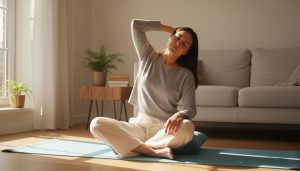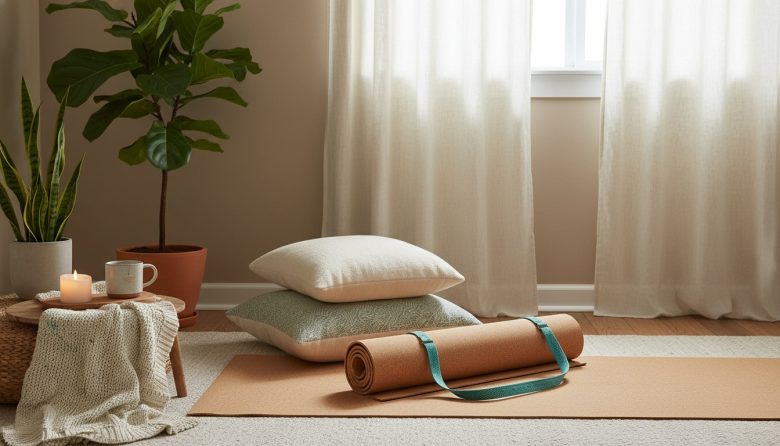
Picture this: sunlight filters through sheer curtains, warming a soft rug where you unroll your yoga mat. The air carries a hint of lavender, and plush cushions invite you to linger in child’s pose. This cozy nook isn’t just a spot—it’s a gentle hug for your body and mind, making gentle yoga feel less like a chore and more like coming home.
A dedicated space like this can transform your practice. Familiar surroundings often cue your body’s relaxation response, dialing down stress hormones like cortisol. Research on environmental cues shows that calming setups may support better habit formation, helping you show up consistently for poses that ease tension and build strength over time.
Gentle yoga already nurtures flexibility and calm, but pairing it with a personalized haven amplifies those benefits. Think of post-work evenings where dim light aligns with your circadian rhythm, promoting deeper rest. Small touches, like a favorite blanket, can make sessions feel sustainable and joyful.
Ready to create yours? Start with one tweak this week—maybe layer a blanket under your mat—and note how your mood shifts afterward. Track simple signals like energy levels or ease of breathing. Your body will thank you with that post-practice glow.
Why a Cozy Yoga Nook Boosts Your Gentle Practice
A cozy nook works its magic by signaling safety to your nervous system. Familiar, soft elements often trigger the parasympathetic response, which counters everyday stress. This shift can lower heart rate and ease muscle tension, setting the stage for gentle flows.
Consistent spaces also align with your circadian rhythm. Soft, natural light in the mornings or evenings may help regulate sleep-wake cycles, making yoga a natural wind-down ritual. Picture sinking into savasana as dusk falls—your body learns to unwind here.
Habit adherence gets a lift too. When your spot feels inviting, you’re more likely to practice regularly. Studies on environmental design suggest comfortable cues build momentum, turning occasional stretches into daily delights.
For post-work wind-downs, this setup shines. It creates a buffer from screens and hustle, fostering mindfulness. Over time, these moments may enhance overall well-being without overwhelming effort.
Spotting the Sweetest Corner in Your Home
Begin by seeking quiet areas with good ventilation. Corners near windows often provide natural light and fresh air flow, ideal for breath-focused poses. Assess foot traffic—choose spots where interruptions are minimal.
Visualize the space: stand there and flow through a sun salutation. Does it feel open? Check for drafts or stuffiness; a gentle breeze keeps energy circulating.
Here are three location ideas to try. Transform a bedroom alcove with its inherent privacy. Edge out a living room nook by a bookshelf for subtle seclusion.
Or claim a balcony spot if available—outdoor light adds a biophilic boost. Each option adapts to your home’s layout, keeping things beginner-friendly.
Layering Soft Foundations for Grounded Comfort
Start with the floor: a thick rug or yoga mat provides cushioning for joints. Affordable options like non-slip mats from big-box stores work wonders underfoot. Feel the plushness—it supports knees in gentle warrior poses.
Layer blankets for extra warmth and stability. Fold them for seated twists or drape for restorative holds. Wool or cotton varieties hug your body without slipping.
Source smartly: repurpose throws from your linen closet. Test by sitting cross-legged—does it feel nurturing? This base builds confidence for longer sessions.
Gentle yoga thrives on comfort, so prioritize what feels supportive. Over time, these layers may reduce minor aches, inviting more frequent practice.
Crafting a Glow That Invites Gentle Movement
Light sets the mood—opt for dimmers or sheer curtains to diffuse harsh rays. This soft glow often calms the nervous system, mimicking sunset hues. Your eyes relax, easing into forward folds.
Candles or salt lamps add warmth without flicker overload. Place them safely aside, letting golden light pool on your mat. Evenings benefit most, syncing with natural melatonin cues.
What to try: first, hang lightweight fabrics over windows for filtered sun. Swap bulbs for warm LEDs at 2700K. String fairy lights along edges for whimsy.
Layer with a small mirror to reflect light, expanding the feel. Experiment during golden hour—note how it influences your breath depth. These tweaks create an inviting entry to movement.
Follow These 5 Steps to Build Your Cozy Haven
Building your space flows intuitively with these steps. Follow them visually, like arranging a photo-worthy retreat. Each builds on the last for a grounded, serene setup.
- Clear and measure your spot—aim for at least 6×6 feet. Remove obstacles for safety, ensuring room to extend arms overhead.
- Anchor with plush flooring and a supportive mat. Roll out layers that cradle joints, testing stability with a gentle sway.
- Soften the light and add plants for biophilic calm. Pothos or succulents purify air subtly, drawing your eye upward.
- Incorporate sensory layers like cushions and diffusers. Scatter bolsters for props, inhaling calming mist as you settle.
- Test with a 10-minute session—child’s pose to cat-cow—and tweak for your flow. Adjust heights or textures based on feel.
Safety first: ensure slip-free surfaces and space for safe movement. Avoid edges near stairs. If balance is a concern, add wall support.
Track energy post-setup—journal a quick note on relaxation levels. This encourages personalization, making your haven evolve with you. Consider warming up with how to do easy neck and shoulder rolls daily right there.
Adding Whispers of Scent, Sound, and Personal Magic
Scent elevates the senses—diffuse lavender or eucalyptus for a spa-like veil. A few drops in water warms gently, wafting calm during holds. It often soothes the stress response without overpowering.
Sound layers softly: curate playlists of nature sounds or gentle chimes. Low volume lets breath lead, enhancing mindfulness. Apps offer free options tailored to yin styles.
Personal magic shines through mementos—a photo of a serene beach or crystal. Place them at eye level for inspiration mid-flow. These touches make the space uniquely yours.
What to try: brew how to brew soothing herbal teas in minutes nearby for post-practice sips. Curate a 20-minute acoustic playlist. Add a vision board corner. Tuck in a beloved scarf as a wrap. Keep it sparse to avoid clutter.
Sustaining the Coziness for Everyday Flow
Refresh weekly with a quick dust and fluff. Seasonal tweaks—like holiday lights or summer fans—keep it fresh. This ritual maintains the inviting vibe effortlessly.
Set up how to set up weekly gentle wellness check-ins to review what sparks joy. Journal practice feels: did the light lift your mood? Adjust accordingly.
Your nook grows with you, fostering lifelong ease. Experiment freely—small evolutions yield big calm.
FAQ
How much space do I really need for gentle yoga?
Often 6×6 feet works well for most flows, allowing arm extensions and forward bends without crowding. Adapt to your home by focusing on a clear movement area—measure by lying flat with limbs outstretched. Smaller spots can still feel expansive with smart layering and mirrors reflecting openness.
What if I live in a tiny apartment?
Yes, a mat-sized closet or wall corner may help create intimacy without isolation. Prioritize vertical storage like wall hooks for props, freeing floor space. Mirrors and light colors trick the eye into perceiving more room, supporting breathwork even in compact areas.
Are expensive props necessary?
No, household blankets and pillows often provide ample support for gentle styles like restorative poses. Roll towels for bolsters or stack cushions for elevation—these mimic pricey gear effectively. Start simple, upgrading only if specific needs arise over time.
How do I keep the space from getting cluttered?
Dedicate a basket or shelf for props, containing items post-use. A 2-minute tidy ritual—sweep mat, fluff cushions—tends to maintain the calm effortlessly. Rotate decor seasonally to keep visual interest without accumulation.
Can this setup help if I’m new to yoga?
It can ease beginners in by making practice feel approachable and less intimidating. The cozy cues build confidence, encouraging short sessions that grow naturally. Track simple signals like post-session relaxation or mood lifts to see progress unfold.