Picture this: You wake up feeling like a rusty hinge, every movement reminding you of yesterday’s desk marathon or evening couch slump. That stiffness isn’t just annoying—it’s your body’s signal that flexibility is slipping away amid busy days. Gentle daily stretches can change that, easing you into fuller range of motion without needing a gym membership or hours of time.
Flexibility supports everyday ease, from reaching high shelves to playing with kids or pets without a twinge. It often ties into better posture and reduced tension, making life feel lighter. The good news? You can weave these in during natural pauses, like waiting for coffee or between meetings.
Many folks start noticing looser shoulders after just a week of consistent, gentle efforts. No contortions required—these are simple holds that fit any schedule. Ready to reclaim that fluid movement? Let’s explore how, step by step.
Why Gentle Stretches Support Long-Term Flexibility
Gentle stretches work by encouraging muscle elasticity, allowing fibers to lengthen safely over time. This process supports joint mobility, as surrounding tissues become less rigid. Regular practice tends to improve range of motion, helping with activities like bending or twisting.
From a body mechanics view, stretching activates the parasympathetic response, which calms the nervous system and reduces overall stress. Tight muscles often stem from prolonged sitting or stress-induced contraction; gentle lengthening counters this. Studies on consistent low-intensity stretching show gains in flexibility markers, like sit-and-reach tests, within weeks for many adults.
It’s not about extreme poses but cumulative effect—short sessions daily build resilience. This approach may enhance circulation, delivering nutrients to muscles and joints. Over months, you might find daily tasks feel smoother, with less effort.
Beyond physical perks, it fosters body awareness, tuning you into subtle tensions early. This preventive habit can help maintain independence as we age. Think of it as quiet maintenance for a more agile you.
Building a Foundation: Safe Stretching Basics
Start with breath-focused stretches: Inhale deeply through your nose, exhale slowly as you ease into the hold. Aim for 20-30 seconds per stretch, repeating 2-3 times. This rhythm supports muscle relaxation without strain.
Warm up first with light movement, like marching in place or arm circles, for 1-2 minutes. Cold muscles are prone to tweaks, so gentle activation prepares them. Listen to your body—mild warmth or pull is good; sharpness means stop.
Body awareness cues include scanning for even effort on both sides and adjusting as needed. Move slowly, no bouncing, to avoid micro-tears. These basics make stretching sustainable and effective from day one.
Gentle Stretching Do’s and Don’ts
A simple table can clarify safe habits versus pitfalls, especially for beginners. It highlights quick wins and common errors to sidestep. Use this as your go-to reference for confident practice.
| Do | Don’t | Why It Matters |
|---|---|---|
| Breathe deeply and rhythmically | Hold your breath | Breathing promotes oxygen flow and muscle relaxation, reducing tension buildup. |
| Stretch to mild tension only | Push into pain | Mild pull builds flexibility safely; pain signals potential injury risk. |
| Warm up with light movement | Stretch cold muscles | Warm tissues are more pliable, lowering strain chances. |
| Hold steadily for 20-30 seconds | Bounce or jerk | Steady holds lengthen fibers gradually; bouncing can cause tears. |
| Balance both sides evenly | Favor one side | Evenness prevents imbalances that lead to discomfort later. |
| Adjust based on daily feel | Force the same depth daily | Your body varies; listening supports progress without overload. |
| Combine with good posture | Slouch during stretches | Alignment enhances effectiveness and protects the spine. |
Refer to this often—it’s a roadmap to smarter sessions. Many find fewer aches just by swapping one “don’t” for a “do.”
Everyday Moments for 5-Minute Stretch Flows
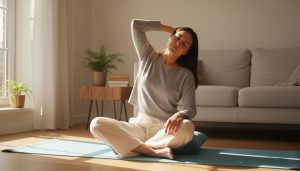
Post-wakeup neck rolls: Stand tall, drop chin to chest, then roll ear to shoulder slowly—5 each side. This eases overnight tension, prepping your spine for the day. Do it while coffee brews.
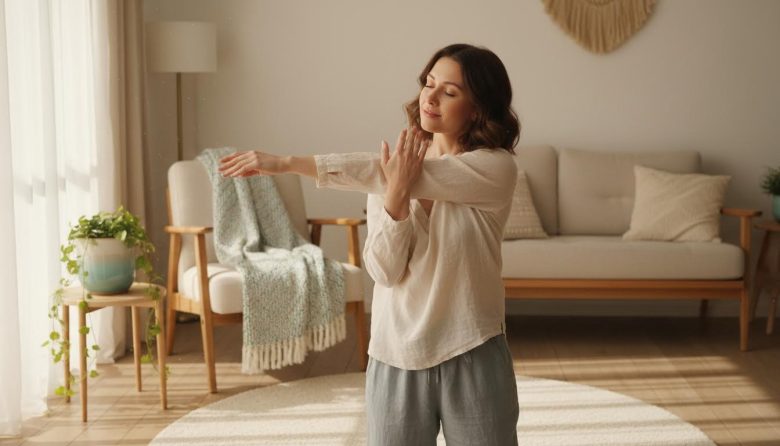
Desk shoulder openers: Clasp hands behind back, lift arms gently, hold. Feel the front chest expand—great for screen hunch. Sneak it in between emails; coworkers won’t even notice.
Bedtime leg stretches: Lie back, hug one knee to chest, then straighten leg upward. Switch sides. It unwinds hips after walking or stairs, signaling rest mode to your body.
Walk break flows: After 10 minutes strolling, pause for standing quad pull—heel to glute, hold rail if needed. Pairs movement with lengthening for fuller benefits. Ideal during lunch or calls.
These fit anywhere, turning idle moments productive. Start with one flow daily; layer more as it feels natural. Real-life example: Sarah, a teacher, added neck rolls mornings and felt less foggy by noon.
Safety Notes and Listening to Your Body
Ease off at sharp pain, dizziness, or new swelling—these warrant a pause. Recent injuries or chronic conditions? Consult a doctor or physical therapist first. Modifications like seated versions work well.
For older adults or those with arthritis, shorter holds (10-15 seconds) often suffice. Stay hydrated and stretch post-warm-up. This cautious approach keeps benefits flowing safely.
Everyone’s body differs—pregnancy, osteoporosis, or surgeries may need tailored advice. When in doubt, professional input ensures peace of mind. Gentle is key; force never is.
Weaving Stretches into Your Routine Without Overload
Habit stack: Pair neck rolls with your morning brew or leg stretches with evening TV. This piggybacks on existing cues, making it stick effortlessly. No need for extra slots in your calendar.
Track simple signals like morning stiffness or end-of-day energy. A quick note in your phone helps spot patterns. Consider how starting a quick journaling habit for clarity can amplify this by logging mood shifts from stretches.
Link it to broader wellness, such as a weekly self-care routine for stress-free living, where stretches slot into unwind time. Begin tiny: One 5-minute flow today. Notice how it ripples into better sleep or pep.
Experiment freely—swap flows based on tight spots. Consistency trumps perfection; even 3 days a week builds momentum. You’re crafting ease, one breath at a time.
Progress Checkpoints: Simple Ways to Notice Gains
Watch for easier reaching, like grabbing socks without bending awkwardly. Clothes may feel less constricting around hips or shoulders. These subtle shifts signal progress.
Gentle escalation: Add 10 seconds to holds or a new flow weekly. Test with a wall toe-touch monthly—measure loosely. When thinking about a simple 7-day plan to boost natural daily energy, notice how flexibility fuels those vitality gains.
Celebrate small wins, like fluid arm circles. Personalize pace; bodies respond uniquely. Keep tweaking—your agility story unfolds gradually.
Frequently Asked Questions
Can gentle stretches really improve flexibility if I’m over 50?
Often yes, with steady practice—many in this age group see joint mobility gains from consistent, breath-led holds. Responses vary by starting point and health; starting slow with 3 sessions weekly helps. Modifications like chair stretches make it accessible, building confidence over time.
How long before I notice differences?
It may take 2-4 weeks of daily 5-10 minutes for most to feel looser muscles or easier movement. Track personal cues like reduced morning creaks or better reach. Patience pays; consistency accelerates it without rush.
What if I have tight hips from sitting all day?
Target with supine figure-four or seated twists, holding gently 20-30 seconds per side. Alternate days to avoid fatigue; warm up first. This often eases desk-bound tension, but pair with standing breaks for best flow.
Do I need yoga experience?
No, these are beginner-friendly with no poses required—just simple, guided holds anyone can try. Visuals or mirrors aid form; start seated if standing feels off. Experience isn’t the barrier; curiosity is the entry.
Can I combine this with walking or strength training?
Yes, it complements nicely—stretch post-walk to deepen benefits or pre-strength for warmer muscles. Space them 4-6 hours apart if possible. This synergy often boosts overall resilience and recovery.